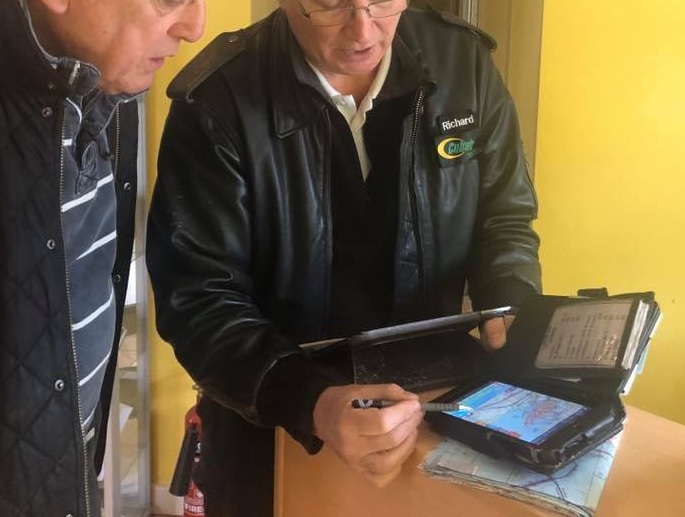
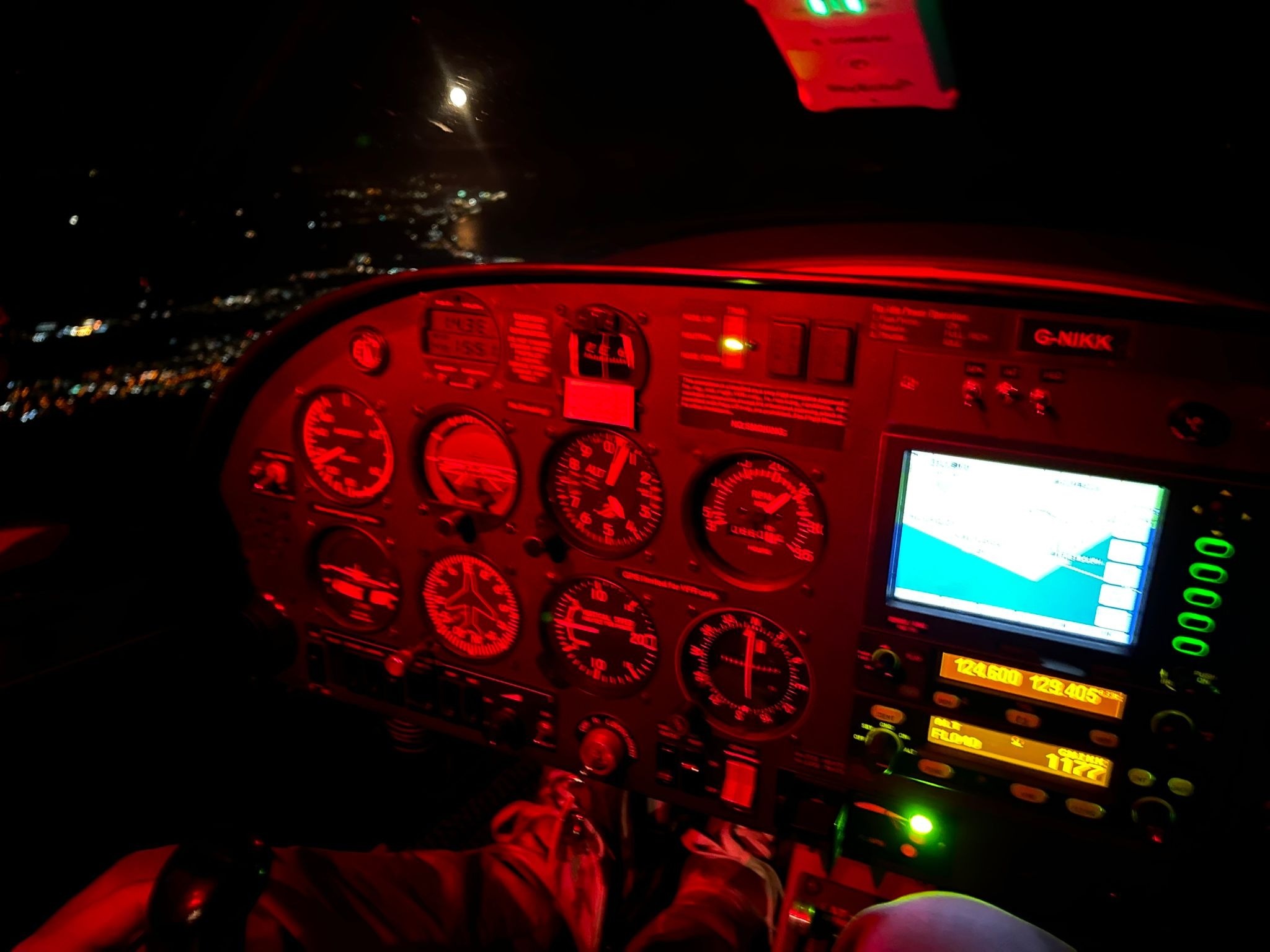
Cubair offers courses of training
for both the Private Pilot Licence (PPL) and the National
Private Pilot Licence (NPPL) issued by the UK Civil
Aviation Authority (CAA).
The PPL is an internationally recognised licence.
Following successful completion of a course of training at
Cubair and after application to the CAA you would be
issued with a PPL with privileges to fly a single engine
piston aeroplane (land) as pilot in command. Subject to
relevant training and further ratings the licence
privileges may be extended to fly any aircraft type. The
licence privileges may also be extended with additional
ratings for instrument flying, aerobatics, night flying,
mountain flying and glider or banner towing.
The NPPL is a UK only licence. The privileges of the
holder of an NPPL for aeroplanes are to act as pilot in
command of air on single-engine piston aeroplane or
touring motor glider with a maximum certificated take-off
mass of 2000 kg or less, carrying a maximum of 3
passengers, such that there are always a maximum of 4
persons on board of the aircraft. Following successful
completion of a course of training at Cubair and after
application to the CAA you would be issued with a NPPL
with privileges to fly a single engine piston (land)
aeroplane.
The PPL course requires a minimum of forty five hours
flying training and the NPPL course requires a minimum of
thirty two hours flying training. There are ground
examinations, covering a range of subjects including
Aviation Law, Navigation, Meteorology, Principles of
Flight, Airframes and Engines, Airworthiness, Instruments,
Human Performance and Radio Telephony. Preparation for the
written examinations is covered by a combination of
self-study from textbooks and briefings from your
instructor. Certain areas of ground training are required
to have been completed at particular stages of your flying
training. If you are planning an intensive course, it is
best to get the majority of your ground studies and
examinations completed before commencing your flying.
There is no time limit within which the flying has to be
completed; you can spread your training over as long a
period as you wish. However, we find that the longer the
break between flying lessons the more overall flying time
will be needed to attain the required standard. The course
of flying commences with learning the effects of the
various aircraft controls, then on to straight and level
flight, climbing, descending, turning and stalling. Once
the basic skills have been mastered your training
concentrates on take-off, flying a circuit around the
aerodrome and landing. When these skills have been
learned, your instructor will leave you to fly the
aircraft on your own, your ‘First Solo’. There now follows
a period of consolidation of your flying skills before
moving on to steep turns, forced landings, low-level
operations, stalling, spin awareness, slow flight,
instrument flying and cross-country navigation. At the end
of the course there is a flight test called the “Skills
Test” to be passed.
A medical certificate is required before solo flight can be
permitted. For the PPL a Class 2 Medical Certificate is
required and for the NPPL either a Class 2 medical or a Pilot
Medical Declaration (PMD) is required. So long as you
are generally fit this should not be a problem. Glasses or
contact lenses are permitted within certain limits. The Class
2 Medical Certificate can be issued following successful
examination by any one of a number of doctors authorised by
the CAA as medical examiners (AME). The PMD allows you
to self certify that you meet the requirements for a group 1
(car) licence and a few other caveats which are listed on the
CAA website.
The AME that most Cubair pilots use is Dr Philip Ranger at
Room 4, Aero 16. Redhill Aerodrome. Telephone 07486 664829 or
01737 823550 eMail info@pilotsmedical.co.uk